

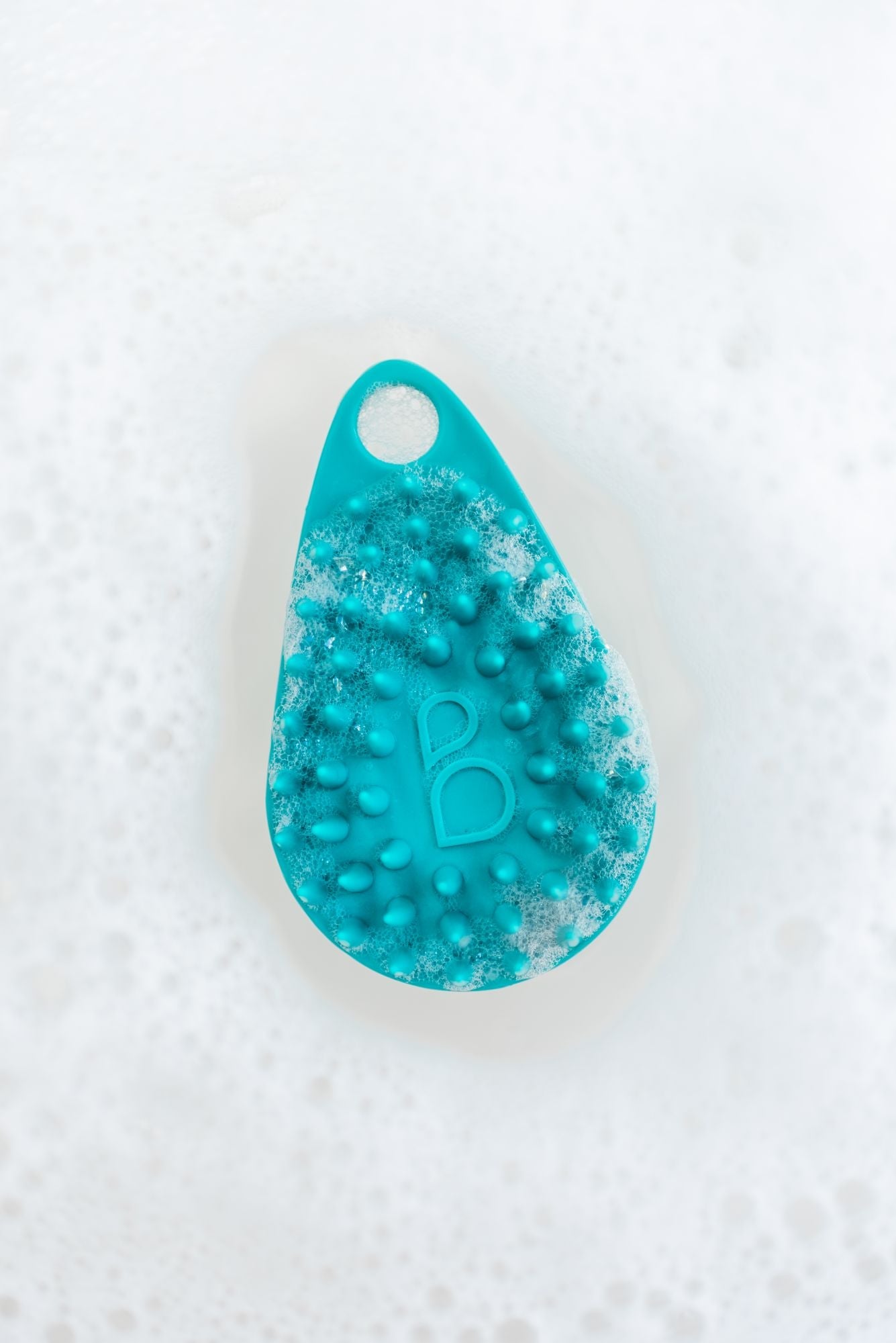
Loofahs work well enough, until you learn what's living inside them. The real problem isn't how they feel. It's that the fiber structure traps moisture, dead skin, and bacteria between showers in a way that's genuinely difficult to clean out. Once you know that, the case for finding a better option becomes obvious, and a non-porous tool like the Scrub-Dub scrubber is the upgrade most people land on.

Why Loofahs Cause Problems
A 1994 study in the Journal of Clinical Microbiology found that natural loofah sponges support a wide range of bacteria, shifting toward a predominantly gram-negative flora as trapped dead skin cells feed the growth. The same moisture-trapping structure applies to plastic-mesh poufs. The warm, moist interior of a loofah is structurally identical to the conditions bacteria prefer for colonization. They don't just sit on the surface; they grow inside layers that rinsing doesn't reach.
Dermatologists routinely recommend replacing loofahs every 3 to 4 weeks. At that rate, you go through 13 or more loofahs a year. That's a running hygiene cost that also generates consistent plastic waste, since most mesh loofahs aren't recyclable.
Natural plant loofahs (dried luffa) shed fibers over time, degrade faster in a humid shower environment, and require replacement even more frequently. Neither version holds up well against the simple question: if the tool you're using to clean yourself is itself a bacterial reservoir, how clean are you actually getting?
What to Look For in a Loofah Alternative
The problem with loofahs is structural: porous, moisture-retaining materials support bacterial growth. The solution is a non-porous material that dries quickly and doesn't provide the warm, wet environment bacteria need to colonize.
That's the design logic behind the Scrub-Dub®. It's made from zinc-infused thermoplastic elastomer (TPE), a non-porous material that doesn't absorb water. After a shower, it dries completely between uses. There's no wet interior for bacteria to establish in, which is the property that makes a loofah replacement actually work as a hygiene upgrade rather than just a cosmetic one. Our loofah vs. body scrubber breakdown goes deeper on the material comparison.
One Scrub-Dub replaces roughly 6 to 13 loofahs over the course of a year, a single year's worth of loofah replacements. The math on waste reduction is straightforward.
The Dual-Sided Difference
Most loofah alternatives only replace the body-scrubbing function. The Scrub-Dub has two sides: a bristle side for body exfoliation, and a spike side designed for scalp use. The spike side works shampoo into the scalp, loosens product buildup, and increases blood circulation to hair follicles while you wash, something a loofah was never designed to do at all.
If you deal with dandruff, dry scalp, or product buildup, the scalp side is where a lot of people find the most noticeable difference. The bristles and spikes are different enough in function that you're genuinely getting two tools in one form factor.
Is It Right for Sensitive Skin?
TPE is softer than most natural loofah materials and gentler than exfoliating washcloths. The bristles flex against the skin rather than dragging across it. People with eczema, psoriasis, and dry or reactive skin regularly use it without the irritation they experience from rougher alternatives. Start with light pressure if your skin is sensitive and adjust from there.
Frequently Asked Questions
What's wrong with natural loofahs, aren't they more eco-friendly?
Natural luffa loofahs are biodegradable, which is a genuine environmental benefit. The tradeoff is that they degrade faster in a humid shower environment, need to be replaced more frequently than plastic mesh versions, and still trap bacteria inside their fiber structure. A single Scrub-Dub lasting 12 months produces less total waste than 12 or more natural loofahs in the same period, even accounting for the manufacturing footprint of TPE.
How do you clean a Scrub-Dub between uses?
Rinse it thoroughly after each shower and hang it to dry. Because TPE doesn't absorb water, it dries completely between uses without any special treatment. For a deeper clean, soak it in warm water with a small amount of dish soap or white vinegar for 5 to 10 minutes once a week, then rinse and air dry.
How long does a Scrub-Dub last?
About 12 months with regular use. The bristles soften gradually with daily exfoliation, that's the signal to replace it. Annual replacement is the recommendation, the same logic as replacing a toothbrush, where the hygiene case for a fresh one is straightforward even if the old one still technically works.
Can it replace both a body scrubber and a scalp massager?
That's the design intent. The bristle side handles body exfoliation; the spike side works as a scalp scrubber and shampoo-distribution tool. Most people use both sides in the same shower session rather than keeping two separate tools.
Choose Your Set.

Single
The full Scrub-Dub experience. Spike side for your scalp, bristle side for your body.
$25
Duo Pack
One for you, one for your partner or guest bathroom. Two scrubbers so your whole household makes the switch.
$40 $20 each, save $10
Trio Pack
Keep two at home, gift one, or stock the whole house and never run out. The best value per scrubber.
$57 $19 each, save $18