

A scalp scrubber can reduce dandruff flaking, but only if you understand what dandruff actually is and what the scrubber is doing about it. This isn't a cure. It's a mechanical intervention that removes the buildup layer blocking your shampoo from reaching the scalp.

Medically reviewed by Michael Bair, PA-C
Written by Ryan Payne · May 2026
What Actually Causes Dandruff
Dandruff is not caused by a dry scalp, poor hygiene, or the wrong shampoo. It's caused by a combination of three things: a naturally occurring yeast called Malassezia, sebum (your scalp's natural oil), and your immune system's inflammatory response to both.
Malassezia lives on every human scalp. In people who develop dandruff or seborrheic dermatitis, the yeast metabolizes sebum and produces byproducts that trigger skin cell turnover at an accelerated rate. Instead of shedding invisibly every roughly 4 to 6 weeks, skin cells clump together and fall off as visible flakes. According to research published in the Journal of Investigative Dermatology, seborrheic dermatitis affects approximately 50 million Americans, making it one of the most common scalp conditions in adults.
The problem medicated shampoos run into is access. Zinc pyrithione, ketoconazole, selenium sulfide, these antifungal and antimicrobial ingredients only work when they actually contact the scalp surface. If there's a layer of dead skin, oil, and product residue sitting on top, the active ingredient stays in that layer, rinses out, and never does its job. That's why people use medicated shampoos for months and see inconsistent results.
What Mechanical Exfoliation Actually Does
A scalp scrubber doesn't target Malassezia. What it does is physically lift the buildup layer, giving your shampoo direct access to the scalp surface.
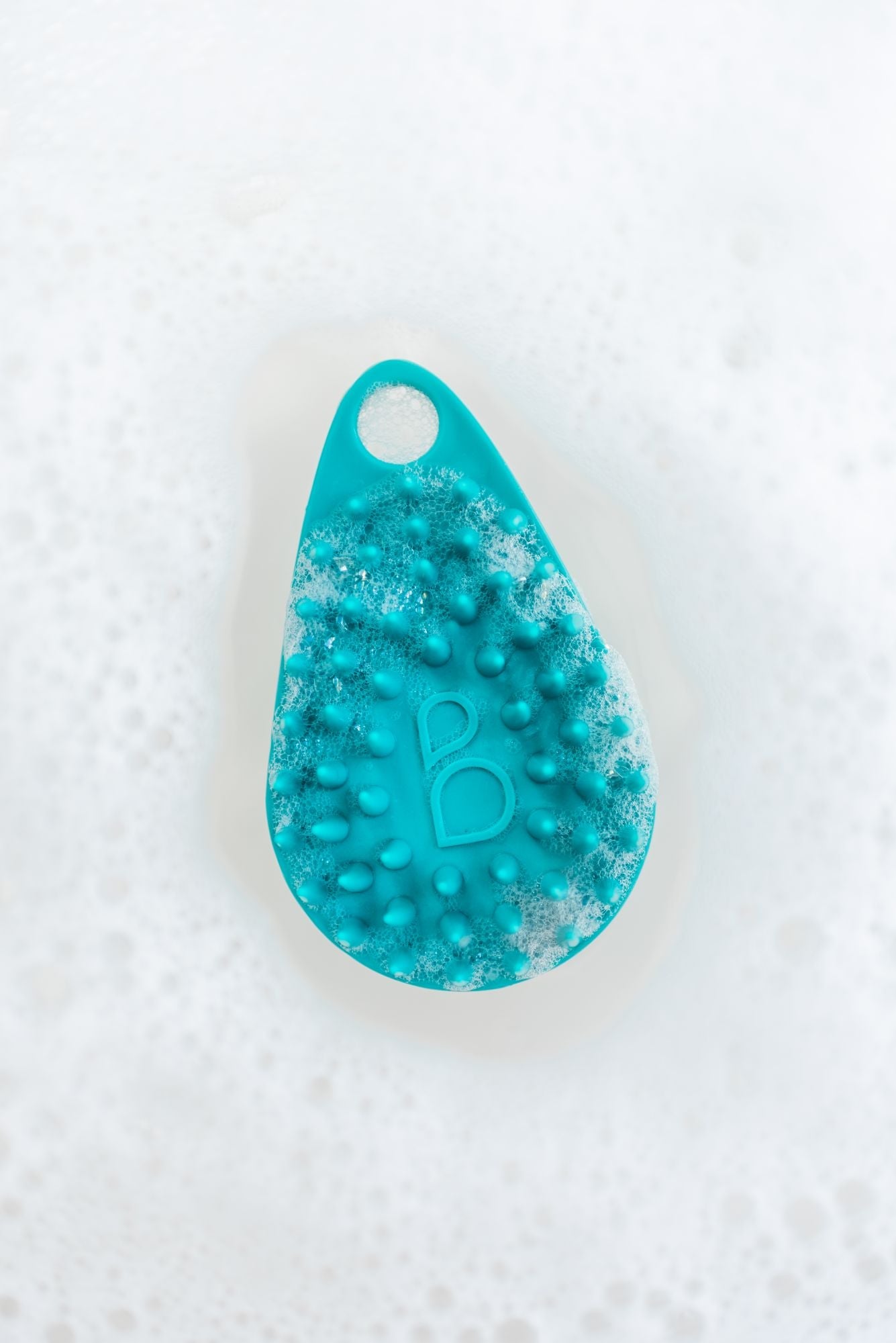
The spike side of the scrub-dub® works shampoo into the scalp while simultaneously loosening dead skin, sebum, and product residue. This does two things: it removes the existing flakes (the visible symptom), and it clears the path for your antidandruff shampoo to work at full effectiveness. People using medicated shampoos typically notice a faster response when they add mechanical exfoliation to the same routine.
Scalp massage also increases blood circulation to the follicles. A 2016 study in Eplasty found that standardized scalp massage increased hair shaft thickness over 24 weeks, attributed in part to improved follicle stimulation. Better circulation means your scalp's natural shedding cycle regulates more normally, which is the goal when managing dandruff long term.
How to Use a Scalp Scrubber for Dandruff
This matters. The technique makes a difference in how much buildup you actually remove.
- Wet your hair and scalp fully before applying shampoo.
- Apply your antidandruff shampoo directly to the scalp, not the hair.
- Press the spike side of the scrub-dub firmly against your scalp at the hairline.
- Work in small, firm circles from the hairline toward the back of the neck. Cover the full scalp in sections.
- Leave the shampoo on for 2 to 3 minutes before rinsing. This contact time is what most people skip, and it's the step where the active ingredient actually works.
- Rinse thoroughly. Incomplete rinsing leaves residue that feeds the buildup cycle.
For dandruff management, two to three times per week is a reasonable starting frequency. Daily scalp exfoliation is unnecessary and can temporarily increase sensitivity if your scalp is already inflamed during a flare-up. Scale back during active flares and return to the routine once the inflammation settles.
What a Scalp Scrubber Won't Do
If your dandruff is severe, involves significant redness, scaling beyond the scalp, or has been unresponsive to over-the-counter shampoos for more than two months, that warrants a conversation with a dermatologist or PA. Seborrheic dermatitis in more severe presentations sometimes requires prescription-strength treatments, and mechanical exfoliation alone won't address the inflammatory component driving it.
A scalp scrubber is a tool for managing the buildup side of the equation. It works best when it's paired with the right shampoo and used consistently, not as a standalone fix.
Frequently Asked Questions
Can a scalp scrubber cure dandruff?
No. Dandruff is driven by Malassezia yeast and your scalp's inflammatory response to it, neither of which a mechanical tool addresses directly. What a scrubber does is remove the buildup that blocks medicated shampoos from reaching the scalp, which makes your actual treatment more effective. Used consistently alongside an antifungal shampoo, most people see meaningful improvement in flaking within 4 to 8 weeks.
How often should I use a scalp scrubber if I have dandruff?
Two to three times per week is the right starting point for most people. If your scalp is actively inflamed, use it once per week until the inflammation settles, then increase frequency. Daily use isn't necessary and can be counterproductive during flare-ups.
Does it matter which antidandruff shampoo I use with a scalp scrubber?
Yes. The most evidence-backed active ingredients for dandruff are zinc pyrithione, ketoconazole (1% or 2%), selenium sulfide, and coal tar. The scrubber improves delivery of whichever one you use. If you've been using a shampoo inconsistently and not leaving it on for the full contact time, start there before switching products.
Can I use a scalp scrubber if I have scalp psoriasis?
Psoriasis and seborrheic dermatitis look similar but have different drivers. Light exfoliation can help loosen psoriatic scale, but psoriasis requires different treatment (topical corticosteroids, coal tar, biologics in severe cases) and a dermatologist's guidance. Don't use a scrubber on actively irritated or broken psoriatic skin. Talk to your provider before adding mechanical exfoliation to a psoriasis routine.
Is the scrub-dub safe to use daily on the scalp?
The bristle material is soft enough for daily use on an uncompromised scalp, and some people with oily scalps do use it daily without issues. For dandruff specifically, daily exfoliation isn't usually necessary and can overstimulate a scalp that's already reactive. Two to three times per week gives you the mechanical benefit without pushing the scalp into overdrive.
The Tool That Fixes the Access Problem
If you've been using an antidandruff shampoo and not seeing the results you expected, the issue is often access — shampoo not reaching the scalp through buildup. The Scrub-Dub's spike side clears that layer while distributing shampoo directly to the scalp surface. Shop the Scrub-Dub. 30-day guarantee, no return required.